Professional power flushing to remove sludge, restore heat output and protect new boilers and warranties.
Over time, every central heating system builds up a black iron oxide sludge called magnetite. It settles at the bottom of radiators, clogs heat exchangers, seizes pumps and strangles the efficiency of even the best boiler. A proper power flush removes that sludge and restores the system to a clean, free-flowing condition — and it's often a condition of new-boiler warranties that the system has been flushed before installation.
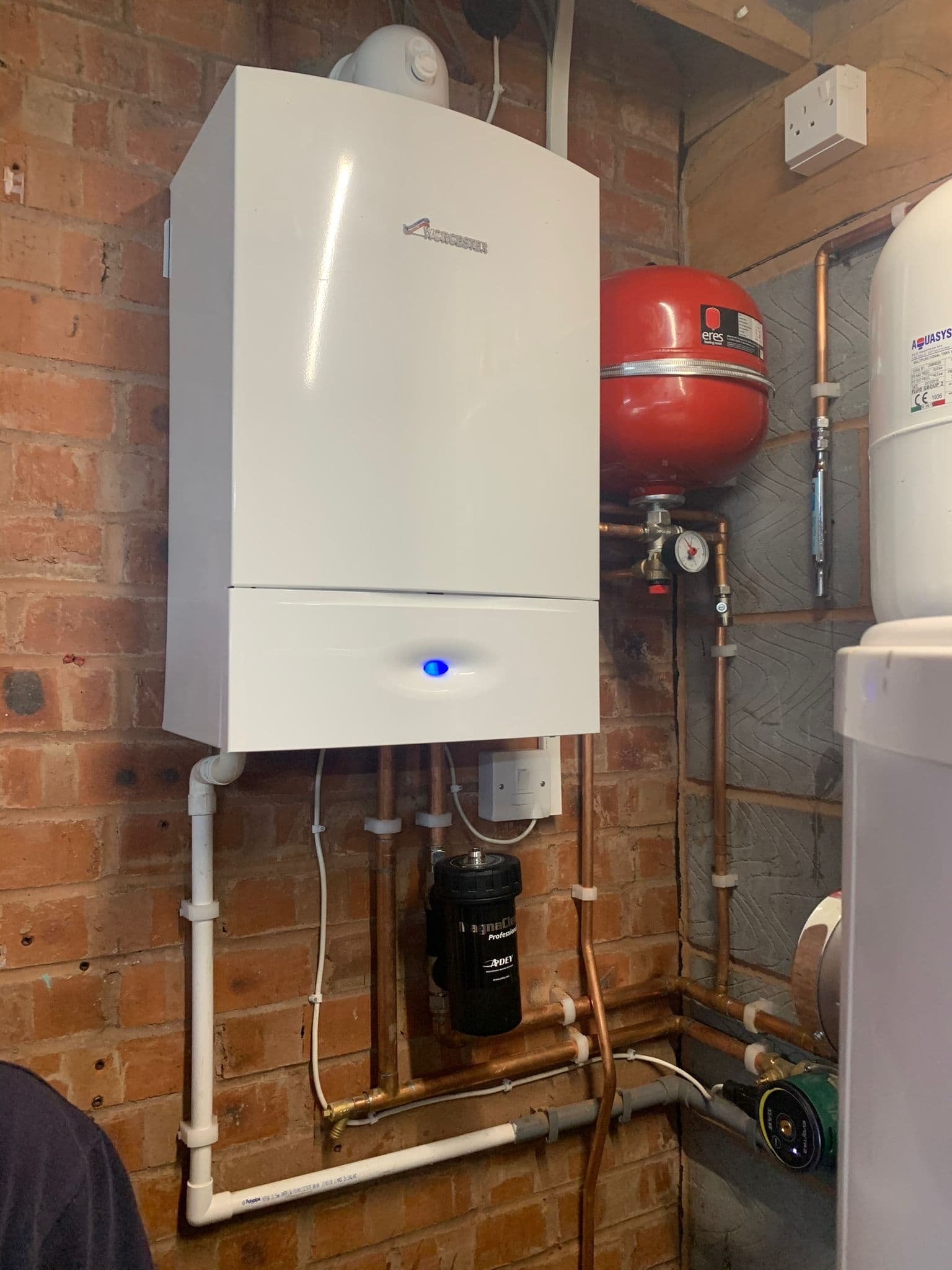
J.Avery Plumbing & Heating carries out full power flushes using high-flow pumping equipment and industry-standard chemicals: a mobilising cleanser to break sludge loose, a descaler to lift limescale deposits from the heat exchanger, and a long-term inhibitor to protect the system afterwards. Every radiator is individually flushed and reverse-flushed, and we use a thermal imaging camera before and after so you can see the improvement in radiator coverage, not just take our word for it. A magnetic system filter is usually fitted as part of the job, which then captures any future debris and protects the boiler long-term.
A full flush typically takes most of a day depending on the size of the system and the severity of the contamination. You'll notice faster warm-up times, quieter running (no more kettling or banging noises), evenly heated radiators from top to bottom, and in most cases a measurable reduction in gas usage. We provide a written report with before-and-after water samples and thermal images, which also serves as evidence for boiler manufacturer warranties and future servicing. With 22 years of experience and Worcester Bosch and Baxi accreditation, we flush systems the right way — thoroughly — rather than the quick way.
How we deliver your power flushing.
We check radiator temperatures with a thermal camera, test a water sample and inspect the boiler for signs of sludge damage so you know exactly what you're dealing with.
We isolate the boiler safely, connect the flushing pump to the system and add a professional cleansing chemical to mobilise sludge and scale.
Each radiator is flushed and reverse-flushed individually, with the dirty water dumped to drain until it runs clear. This is where cheaper 'flushes' cut corners — we don't.
A descaler tackles limescale in the boiler heat exchanger, followed by a neutraliser and multiple clean rinses until the water is clear and pH-balanced.
We dose the system with long-term corrosion inhibitor and fit (or check) a magnetic filter to capture any future debris.
You receive before-and-after thermal images, water samples and a written report suitable for warranty and insurance purposes.
The questions our customers most often ask.
Common signs include cold patches at the bottom of radiators, some radiators not heating up at all, noisy boiler operation (kettling or banging), dirty black water when you bleed a radiator, and repeated pump or valve failures. A thermal camera survey confirms it in minutes.
In most cases, yes. Worcester Bosch, Baxi and other manufacturers require the system to be clean for the warranty to be valid. Fitting a new boiler onto a sludged system is the fastest way to damage the heat exchanger and lose the warranty.
For a typical three-bed house with eight to ten radiators, allow a full working day. Larger systems or heavily contaminated ones can take longer. We give you a realistic time estimate after the initial survey.
If the cold spot is caused by sludge settling at the bottom of the radiator, yes — that's exactly what it's designed to fix. If the issue is a stuck valve, an airlock or an unbalanced system, we'll identify that during the survey and fix it without needing a flush.
A chemical flush circulates cleanser through the system using the boiler's own pump — it's lighter-duty and suitable for mildly contaminated systems. A power flush uses a dedicated high-flow pump and tackles heavily sludged systems properly. We recommend whichever is genuinely needed.
Almost always yes. Customers typically see faster warm-up, quieter running, hotter radiators top to bottom and lower gas bills. We provide before-and-after thermal images so you can see the difference, not just feel it.
With a magnetic filter fitted and inhibitor dosed correctly, a properly flushed system typically lasts 8 to 10 years before another deep flush is needed. We check inhibitor levels at every annual service.
Tell us about your project and we'll be in touch within 2 hours.